It's a fact of life when you are running a business in South East Queensland, whether that be a shop in the Brisbane CBD, a factory in Ipswich, a construction site on the Gold Coast or a small café up in Noosa, there is a lot of mess every day. One of the most quickly accumulating jobs is taking care of your commercial rubbish. It's not just being a good neighbour to do the right thing when it comes to responsible trash collection for businesses in this rapidly expanding corner of the sunny state of Queensland. Savings, cleanliness and avoiding big headaches that cause the workday to stall are both practical and everyday needs.
Local businesses produce tons of cardboard packaging, food waste, and other trash each and every day. Putting everything in a giant skip bin just won't cut it. Local dumpsters are starting to charge astronomical amounts of money and there are strict regulations and rules. Garbage trucks don't come cheap either without being managed.
Step 1: Audit Your Rubbish
Take a close look at the trash before you start reconsidering your waste practices or paying a high price for a rubbish removal service company. Basically it's about watching your garbage. It lets you know what is going in your bins as well as precisely how much stuff you are generating weekly and exactly where you are losing cash on needless garbage collection. Many business owners are surprised to discover they are paying a higher price only to get rid of the air or at best the easily recyclable materials that can be disposed of much cheaper.
To do this walk quickly to your bins just before the collection truck arrives. Record the size of your bins, make an estimate of how full they are, and count the number of truck visits in two weeks. You should only be throwing money away if your bins are consistently half empty when the truck arrives. Then take a look at what's on the inside! The majority of everyday waste is simply clean cardboard boxes, soft plastics, office paper and lunch scraps in a normal office, café or shop around South East Queensland. With these particular items identified then it is possible to determine a strategy to move these items away from the dumpsters and household trash, which can be costlier than dumping anywhere else in the area due to local tip fees. So, if you know what you're discarding, it's the simplest method to conserve your hard-earned money.
Step 2: Stop Mixing Your Waste
We tell you to stop mixing your rubbish together: this is one of the more frequent and costly errors that a company can make; mixing various types of commercial waste together. When washed and dry cardboard or plastic bottles or the scrap wood get contaminated by wet food scraps and grease or liquids from the kitchen, and they are ruined. They cease to have any recycling value at all. In such cases the entire bin must be considered as contaminated with general garbage. This results in considerably higher commercial collection charges and the irksome collection charges by the waste company. Responsible disposal involves creating an environment for proper disposal of waste around your workplace by having identifiable and convenient separation locations. Have individual clearly labeled bins in vibrant colours to avoid the guesswork of your staff. It is possible that if employees are trained to take an additional five seconds to place trash in the proper bin, this could have a tremendous effect on your monthly costs.
The major categories of waste that need to be completely segregated are:
- Paper and Cardboard: clean boxes from suppliers, delivery packages and files.
- Bottles and Cans: staff room hard plastic containers, glass bottles and drink cans (all aluminium).
- Food Scraps and Organics: any food remaining, coffee grounds and kitchen waste that stinks if left out too long.
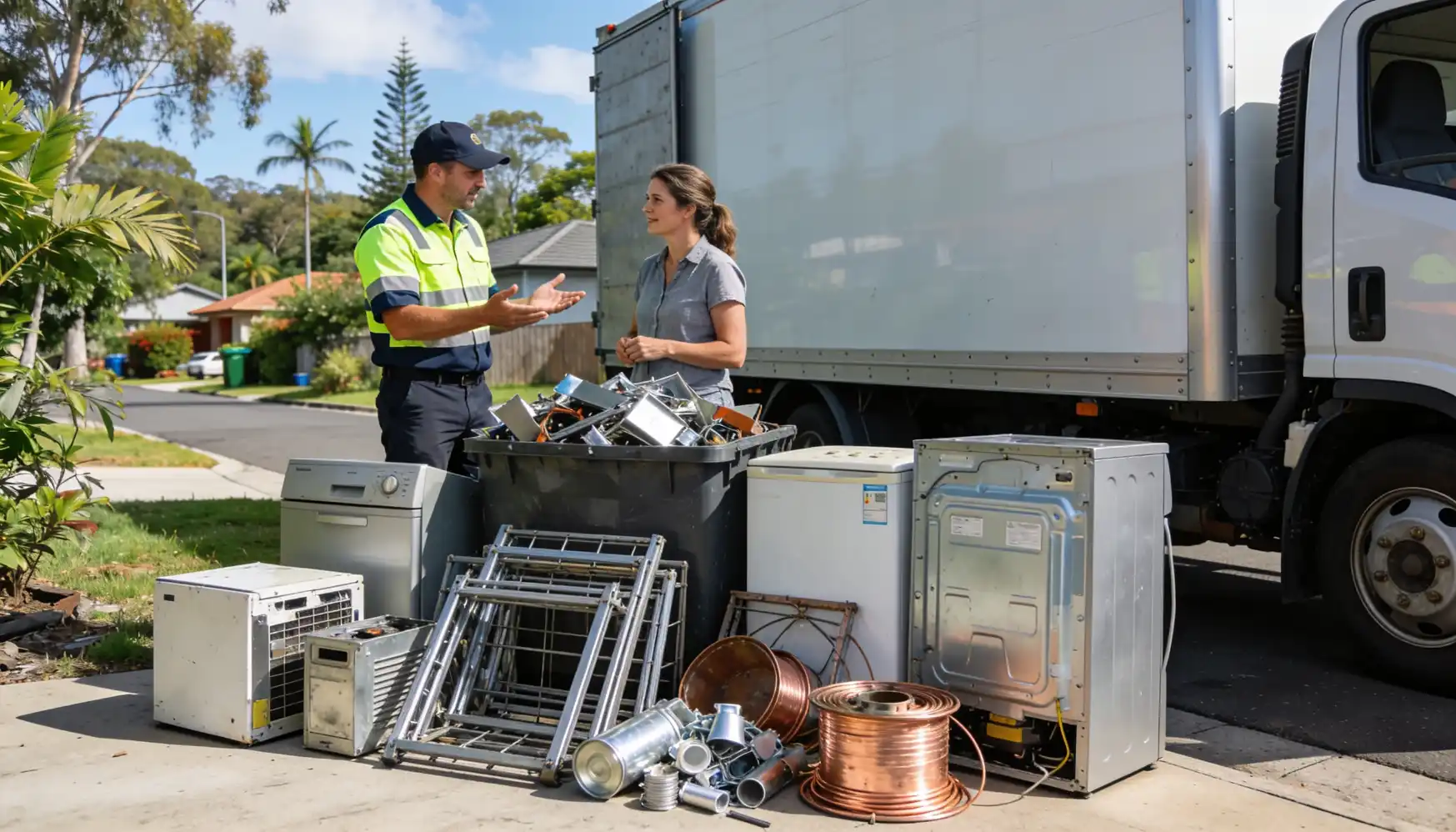
- Building Materials: wood off-cuts, concrete bits, building bricks and metal scraps from building sites.
Step 3: Choose the Right Bins and Contract
Here's another thing many new business owners don't know: most local councils in South East Queensland (including Brisbane, the Gold Coast, Logan and Moreton Bay) won't automatically provide you with a wheelie bin service simply because you pay business rates; you have to apply for it. In most cases, you will need to actively seek out a good, local waste company, pay them for their service and have them collect the waste.
When you're in the process of creating a contract with a waste company, ensure that they provide the correct bin sizes for your waste needs. From small and standard wheelie bins on wheels to large industrial skips that sit out the back, they've got all the sizes and shapes. Ensure bins match the actual amount of waste and are easily manoeuvrable in your driveway or loading bay.
Avoid being sold a large skip that you're never going to use. Also, consider how frequently they visit. For any restaurant owner that has to deal with a lot of food scraps, getting these bins emptied regularly is essential to maintaining a fresh restaurant, to prevent foul odours and to discourage pests. When it comes to discarding, dry paper or cardboard means that you can wait longer to get rid of it, cut back on pickups and keep your bills low.
Step 4: Tricky Materials
If your business uses or makes special products, you need to be particularly careful about disposing of them. Chemicals cannot be dumped down the drain or hazardous materials placed in a regular skip. That is when it can cause damage to local pipes, contaminate local waterways and endanger lives. Without clearance, you can't just drop this off at the local tip either. Examples of this category of trash include liquid waste, grease trap residue from kitchens, used engine oil, and paint strippers. Old asbestos sheets and broken electronics, used needles or outdated medicines from clinics.
If they are items that need to be disposed of, they will not be picked up by the regular garbage truck. Specialist waste company licenses and equipment is essential to safely convey hazardous goods down South East Queensland roads. Each time this waste is passed out of your shop, it must be recorded on a paper or application starting from your shop door to where it will be disposed of. Double check that your contractor knows where to take your waste to an authorised site that will know how to treat, clean or destroy that material safely.
What Goes Down the Drain Matters Too
For any cafe, restaurant, mechanic workshop or small factory, waste is more than just what goes in a plastic bin. It's also about what you put down your kitchen sinks and floor drains. Cooking oils, heavy grease and chemical residues cannot simply be scrubbed down into the town's main sewer. They will freeze, ice up the pipes and foul up the back-up.
Any waste before it goes down the drain you need to get an official ‘go’ from your local water supplier (Urban Utilities or Unitywater). No one wants to be shut down on the spot, and it can happen if you operate without this approval. These water utilities will require the installation of special equipment on your premises such as a special grease trap under the sink, an oil-water separator in the garage or a water treatment tank for treating chemicals. This equipment will collect all the bad material before it gets into the public pipes and therefore prevents costly plumbing repairs and also assists in keeping the environment clean.
Keep It Simple
Sorting your business rubbish in South East Queensland at the end of the day is not about understanding a tonne of complex rules. It's simply about developing good, simple habits as a daily routine. All of the garbage you create is money lost twice; when you purchase the product and when you pay others to remove it.
A cursory glance at the waste you're disposing of, the separation of your recyclables from your wet trash and the selection of a good, local waste company that will be there when you need it will keep your costs low.
This simple solution helps maintain a clean work environment, simplifies day-to-day tasks for your employees, reduces your business expenses and makes you a proud and responsible member of the local Queensland community. If you'd rather get in touch and let us handle the recyclable metal side of it, we're a phone call away.