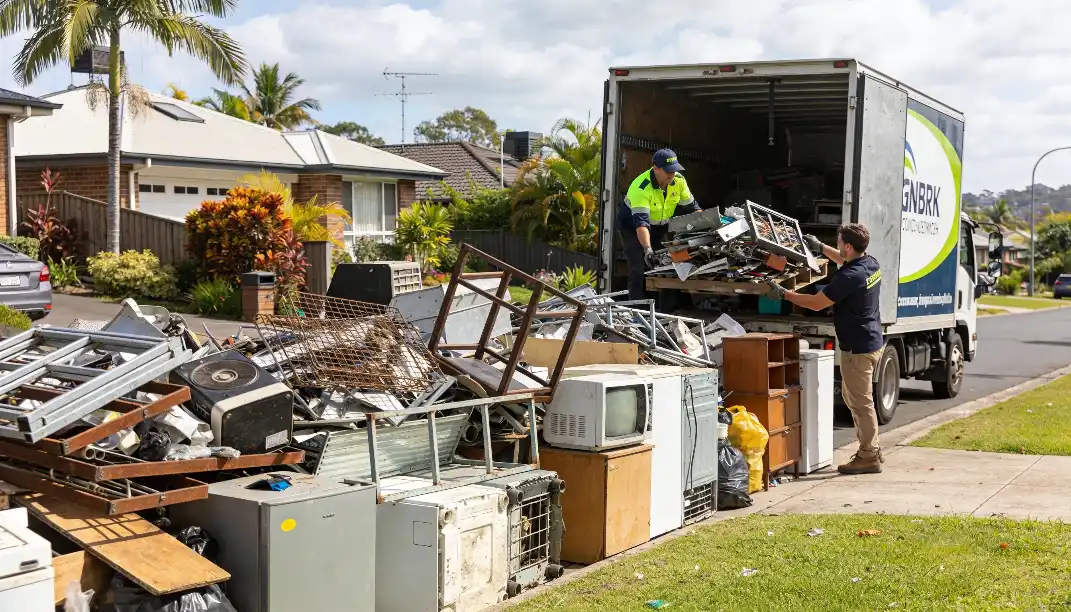
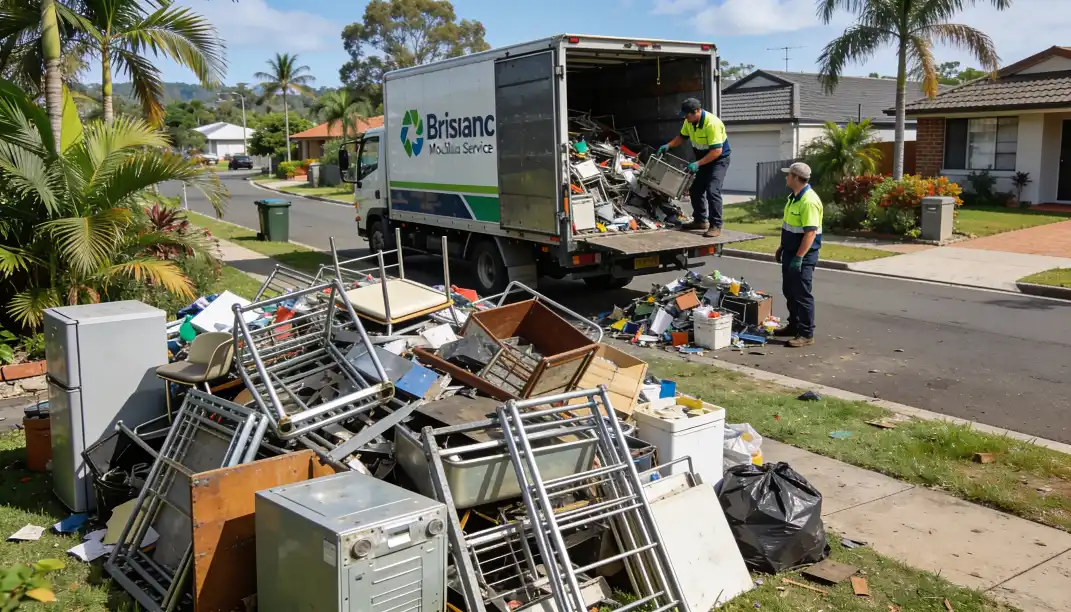
When Brisbane City Council's annual or biennial Large Item collection is announced, there is a very noticeable and collective ‘buzz’ through the entire Brisbane suburb. All of a sudden, the serene weekend routine gets into high gear. Garages are emptied, wardrobes are stripped out and front lawns become temporary labyrinths of old lounge suites, out-of-date exercise bikes and flat-pack wardrobes. A gorgeous service provided by the council which makes cleaning out garbage a breeze, and saves thousands of Brisbane households years of cluttered space under stairs or behind the garden shed.
But, not many Brisbane residents know that the kerbside collection is not an open dump site. The council has very rigid, uncompromising policies on what its clean-up crews will and will not touch. But if you dump the wrong items on your nature strip, sooner than you think you've got a sad and rejected pile of rubbish; a potential environmental hazard; and an unwelcome official warning or a significant littering fine from a council enforcement officer.
It's a big pain for everyone to leave non allowed items on the kerb, but it can be totally avoided. Let's dive deep into it and explore what you can't skip for the bulk waste collection and why, and also how you can do the recycling of these not so easily-recyclable items across Brisbane without damaging the environment or the law.
Why the “No” List Exists
Brisbane City Council's “No” list of dangerous and forbidden items has two key reasons; worker safety and the protection of the environment. The waste collection crews collect thousands of tonnes of waste daily with manual lifting of waste materials into compacting trucks. A ruptured or broken banned item under compression may result in serious injury to the workers or release harmful chemicals straight into the suburban storm water system.
Construction, Renovation and Demolition Waste: if you've just demolished an old bathroom in Chermside and replaced kitchen cabinets in Carindale, then don't put the rubbish on the kerb just yet. Concrete blocks, bricks, loose timber planks, drywall sheeting, porcelain tiles and ceramic toilets will be ignored by the council completely. These products are extremely dense, massive and damaging to standard waste compression systems. Worse still, older Brisbane homes may be laced with hidden asbestos in the wall linings and under-tile backing sheets, and if collection crews break them open on the street, it poses a deadly respiratory risk.
No liquid waste of any kind is permitted — liquid waste includes chemicals, paints and gas bottles. These include partially full paint, garden chemical, auto chemical, pool chemical and commercial chemical tins. When a hidden tin of oil-based paint is squashed by a passing truck, it explodes in the hopper, damaging truck equipment, producing a toxic sludge mess on the road and washing into local creeks the following afternoon, during a sub-tropical downpour. Another type, also very banned, is gas cylinders from the backyard BBQ. These can explosively detonate under the tremendous physical force of the truck's hydraulic compactor.
Do NOT place green waste and soil — tree branches, palm fronds, grass clippings, soil or clay in your bulk waste. They are organic and biodegradable, but must be processed via a different route than household trash. Sending logs and branches into the bulk waste stream wastes valuable landfill space that could be used for valuable and usable compost and mulch.
If you are doing mechanical work in your back garden with a project car, you will need to plan other ways to dispose of your components when it comes to car parts, heavy tyres and batteries in Moorooka. Old car batteries, especially those with lead acid, will be left dead on your lawn, as well as other items like vehicle engines, heavy gearboxes, car doors, panels, and old tyres. If the whole vehicle is unregistered and taking up space, a dedicated tow is the only legal way to clear it. Car batteries are extremely corrosive and pose a huge fire hazard if their terminals come into contact with other metallic debris in the rear of the truck — our guide on storing and transporting old batteries safely covers exactly how to do it without a spill.
In today's tech-savvy world, televisions, old desktop computers, broken monitors, broken laptops, printers and gaming systems to name a few, stack up fast. While it might be very easy to simply take that old, heavy set TV or printer to the kerb, it is in direct contravention of Brisbane's waste management policy. E-waste is a concentrated concoction of highly toxic substances such as lead, mercury, cadmium and brominated flame retardants. These chemicals slowly leach out of these electronics as they are crushed in a landfill, which can pollute the local ecosystem for decades. This, in turn, means that e-waste cannot be placed in the kerbside collection and ordinary wheelie bins.
What To Do Instead
If you are told that your junk is not welcome by the kerb, don't despair, there is a solution for your waste! Brisbane has a great deal of modern, easily accessible resource recovery infrastructure that can cleanly and efficiently process complex waste streams.
The Digital Dilemma: Electronic Waste (E-Waste). It's so easy to simply dump that old, cumbersome tube TV or jumbled-up printer on the kerb, but this is a direct breach of Brisbane's waste management policies. Major elements found in e-waste are highly toxic materials such as lead, mercury, cadmium and brominated flame retardants. These chemicals gradually seep out of these electronics when they are crushed in a landfill, polluting the local ecosystem for decades. This means that e-waste cannot be collected in the kerbside and regular wheelie bins at all.
The Green Waste Bin Scheme: if you do garden work regularly, you are close to a great alternative, the green waste bin scheme which is available in the council and you can just opt-in to it. Gathered once every two weeks and transported directly to a commercial composting centre where it can be used to help clean up your lawn, leaves and small branch piles.
Community Chemical Drop-off Days: check the council website for scheduled chemical, oil and poison drop-off days for the community, so you can drop off all those old chemicals, oils and poisons without having to drive to the larger transfer stations.
If you're putting something big out on the kerb, consider whether it has anything else it needs to do. There is a strong network of charitable op-shops, community recovery networks and internet sites such as buy-nothing groups in Brisbane. A good idea is to donate to someone in need an old chest of drawers or a working bicycle.
The bulk waste collection is a great service to the Brisbane community, but the service requires everyone to play by the rules to ensure our streets remain clean, our workers are safe and our waterways remain pristine. Empty the clutter and sort it out before taking it to the nature strip, before you waste precious time doing this there. You help keep Brisbane green, sustainable and beautiful by separating recyclables, arranging a free collection of your e-waste and keeping hazardous metal equipment off the street. If your pile has been sitting a while, our guide on why leaving scrap un-recycled is a problem explains what to do about it.