
Dirty metal isn't a garbage dump; it's the reality of the yard. They want to take your original metal and turn it into compressed metal and send it back to be melted into new industrial metals. The metal to be melted should be pure if a furnace is to melt it efficiently. You are bringing the yard a problem when you introduce "dirty" scrap. Dirty doesn't necessarily refer to the fact that the metal has mud or dust on it in the recycling business. It is a form in which the target metal actually is physically bonded to other non-metals or with poor metal. If, for instance, you import a bunch of high-quality copper pipes, but they still have heavy brass valves attached to the ends of them or have lead solder joints melting down the sides, then your copper is dirty. The yard is unable to throw that pipe directly into the copper furnace, as the brass and lead will contaminate the end mix.
Understanding the "Grade System" in Scrap Metals
The lowered payout tier from "Clean Domestic Copper" to a lower "Mixed Metals" tier is because those fittings need to be cut off manually with a saw, which requires paying the yard to make such cuts. You just wasted a ton of money because you didn't take 5 minutes to separate the metals yourself. The quickest way to make more money at the scales is to use a simple pocket magnet with the 5-Minute Sorting Rule. This easy-to-use device enables you to instantly divide the catch into two broad groups: ferrous metals and non-ferrous metals.
Ferrous metals (magnetic / low value): if the metal sticks on to the magnet, it is made of iron or steel. Ferrous metals are very abundant, heavy, and inexpensive, and surface rust doesn't stop them being recycled. They are still good for recycling in quantity but they are the lowest price at the weighbridge. Non-ferrous metals (non-magnetic / high value): if the magnet does NOT stick to the object you are holding, it is a non-ferrous metal such as copper, aluminum, brass or stainless steel. The valuable metals are the ones that are the main part of your actual cash payout.
How To Boost Your Payout
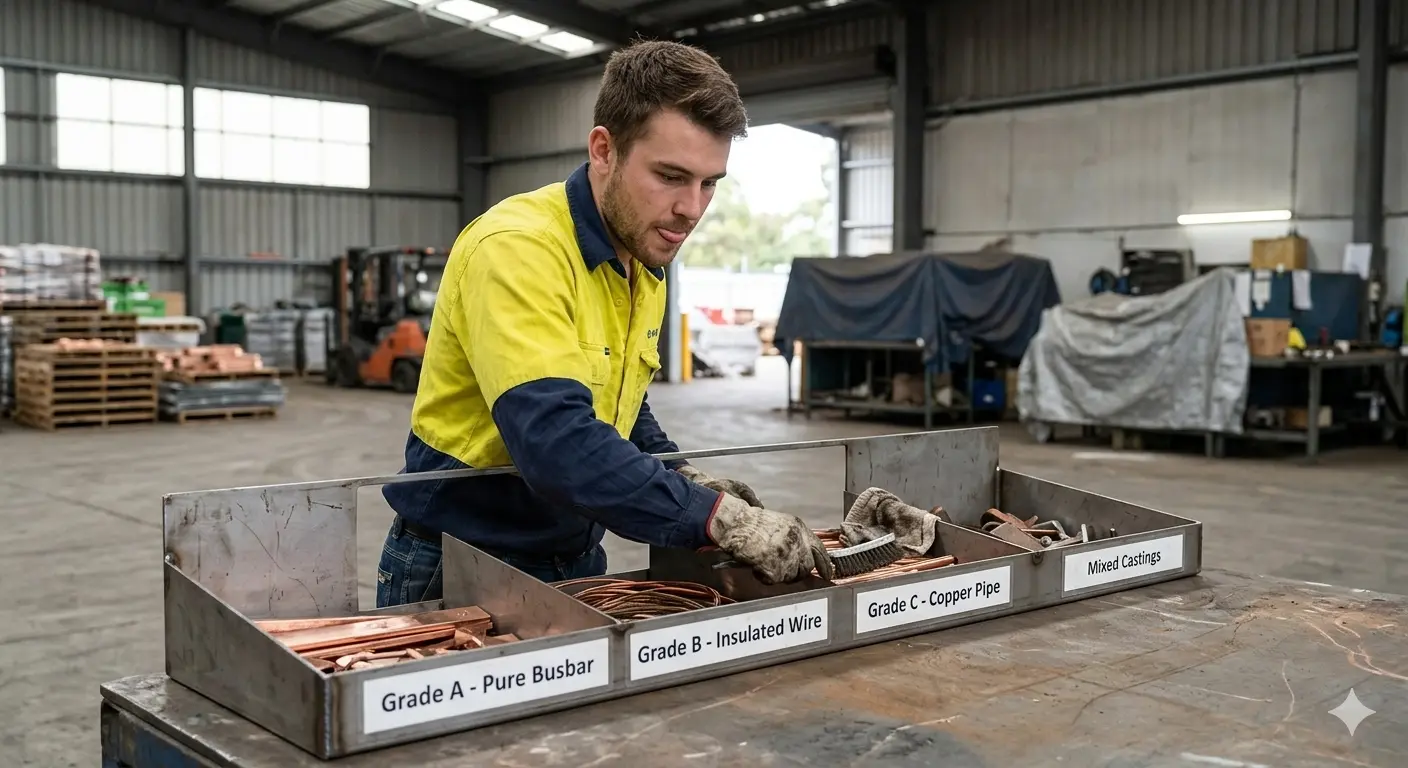
To ensure that you're getting the absolute best tier price for your non-ferrous metals, spend a few minutes in your workshop to clean up your high-value items before loading the truck. Copper wire is much needed but the wire has been insulated with thick plastic. If brought in with the plastic on, then you are paid what is called the " insulated copper wire" rate, which takes into account the dead weight of the plastic. If you have plenty of thick cable, use a simple utility knife or mechanical wire stripper to get rid of the plastic casing, and you'll have "clean bright copper wire," which pays the most in the whole scrap copper industry. Using a pair of pipe cutters, cut away any green brass fittings, plastic brackets, or steel framing clips that may be connected to your copper pipes. Separate the clean copper tubes in one bucket and the brass fittings into another bucket. Brass is also a very valuable non-ferrous metal and if kept in separate bins, you'll also earn premium prices for brass.
Elevating Your Aluminum Scrap
Old aluminum window frames are a good source of scrap and are typically filled with shards of glass, rubber weather stripping and iron screws. Break the glass and remove the plastic seals with a screwdriver and a hammer. The time it takes to strip the frame to pure aluminum is less than five minutes per frame and doubles the value of the load. After you've done the 5 minute sorting at home, your strategy at the actual scrap yard makes a big difference to you getting a final payout. Many sellers spend hours cleaning out their materials, only to forfeit part of their profits due to improper packing of their vehicle or trailer. The trick to the weighbridge is to be a bit ahead of the game, so you can see and appreciate the work the yard operator does to grade your efforts!
The Loading Logic
Always load your materials strategically when loading your vehicle or trailer. The way you stack your metals can directly affect the yard operator's haul value. Fill low-value materials first: put the lighter structural materials, like steel or iron, in the bottom of the tray. Store high-dollar metals on shelves: store your clean copper, brass and aluminum buckets on the top shelf — our guide to cleaning and prepping metal covers exactly how to strip and trim each type first. Keep sorted non-ferrous metals in separate tubs: clearly labeled tubs stop sorted non-ferrous metals from rolling around. Make inspection easy: the yard operator should be able to immediately see your separation efforts when he or she looks into your trailer tray.
Upon entering the yard, the yard man or woman will check the load on the scales. When they observe an untidy pile of iron and everything else on top of it they might think that all the material is mixed waste and charge it at the lowest ferrous rate. When the non-ferrous metals are kept distinctly separate and in an orderly fashion, it is easy for staff to weigh the metals separately on the smaller, more precise scales.
Be Aware of "Mixed Load" Traps
If you arrive at a Brisbane scrap yard carrying a random load, you're playing a big game if you are intending to sort the load while you unload. During busy morning times, yard managers prefer vehicles to be moving through the bays as quickly as they can, to help prevent traffic jams. Don't block commercial trucks: bottlenecks in the grid are a nuisance and slow down business. Prepare for an ultimatum: the line will move rather quickly, or the yard will have to make a quick decision! Don't accept the "mixed load" rate, which is way lower than the flat rate, if they offer it. Don't burn your fuel: the only other option is to refuel your truck and go without any reward. Your best way to safeguard your profit margin is to make sure that you sort all your materials completely prior to leaving your driveway — the same applies whether you're clearing a mixed general scrap pile or stripping parts off a scrap car before it's towed away. It saves you time, makes the yard staff happy and ensures you get all the money your metals are worth. Running a building site? Our guide on cutting commercial skip costs shows how the same sorting habit slashes your QLD waste levy bill.
Work Smarter, Get Paid More
Make your trip to a Brisbane scrap yard easy! Knowing the difference in price between clean and dirty scrap puts you in full control of what you are going to get paid for your scrap. Avoid paying yard labor fees with your hard-won profits. Pick up a magnet, sort your ferrous metals from the rest, rip off those ferricated fittings, and book a collection with an organized, contaminant-free load that's worth top dollar!