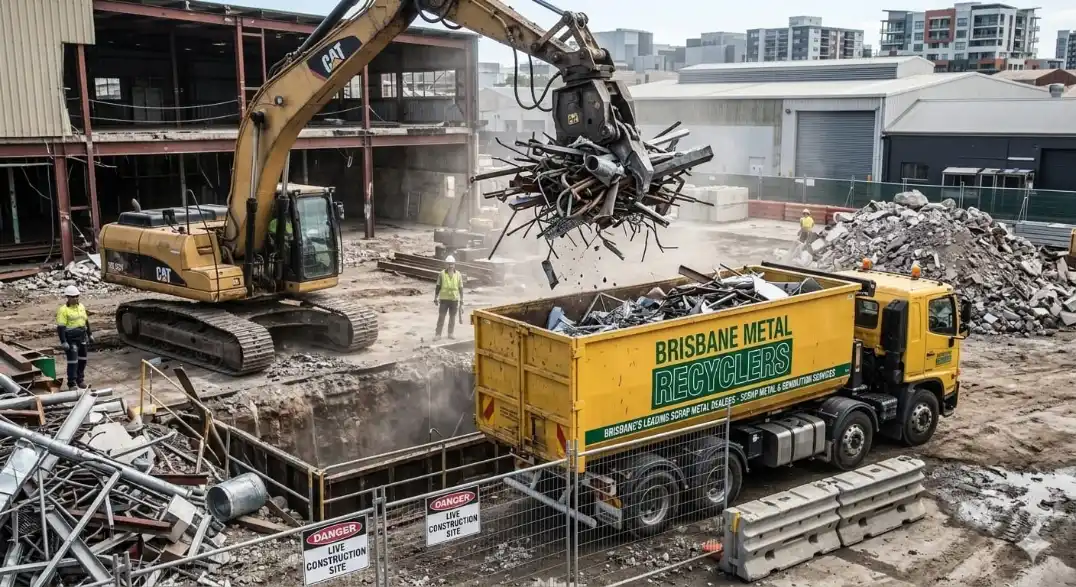
Whether you are a large manufacturing plant undergoing a major overhaul in Wacol, a processing plant undergoing a decommission in Yatala or a major structural demolition in Hemmant near the Port of Brisbane, managing the waste stream is a huge operational challenge. Bulk amounts of heavy structural steel, mixed metal alloys and high value non-ferrous commodities are produced through the clear-out and demolition of industrial sites. Not only does this material cause a chaotic footprint on the job site but it also slows down active workflows, poses significant safety risks and represents thousands of dollars in commercial asset value sitting idle.
The process needs to be streamlined, and that means eliminating ad hoc disposal runs and adopting a professional, organised scrap management program. Clearing industrial and demolition sites of bulk metal components requires high level coordination, compliance with Queensland workplace health and safety regulations, and clear commercial arrangements to safely and cost-effectively manage the process. Done properly, a thorough site cleanup program can be a self-funding, efficient recovery program that keeps your big project on a strict timeline and a tight budget. The first and most important part of a successful industrial site cleanup is a precise assessment and classification of the materials on site prior to the first truck arriving. The good old days of dropping any metal at any yard for free and expecting it to be recycled are long gone, and dumping a high-dollar industrial strip-out into the wrong facility is a huge loss for the owner. Not sure which collection service fits a mixed industrial load? The breakdown below covers exactly how sorting and pricing works on site. A single mixed skip also attracts the QLD waste levy in full — our guide on cutting commercial skip costs explains how splitting scrap out of that bin saves real money.
Separating the Scrap: Ferrous vs Non-Ferrous
On industrial sites, you'll find various kinds and amounts of metals, and you need to identify them properly to safeguard your margins. Your heavy tonnage is dominated by ferrous metals such as heavy structural steel beams, iron casting and rebar from concrete demolition. Non-ferrous metals, such as industrial copper busbars and thick insulated electrical cabling, marine-grade aluminium plates and stainless steel pipework, sell at a premium price per tonne in the meantime.
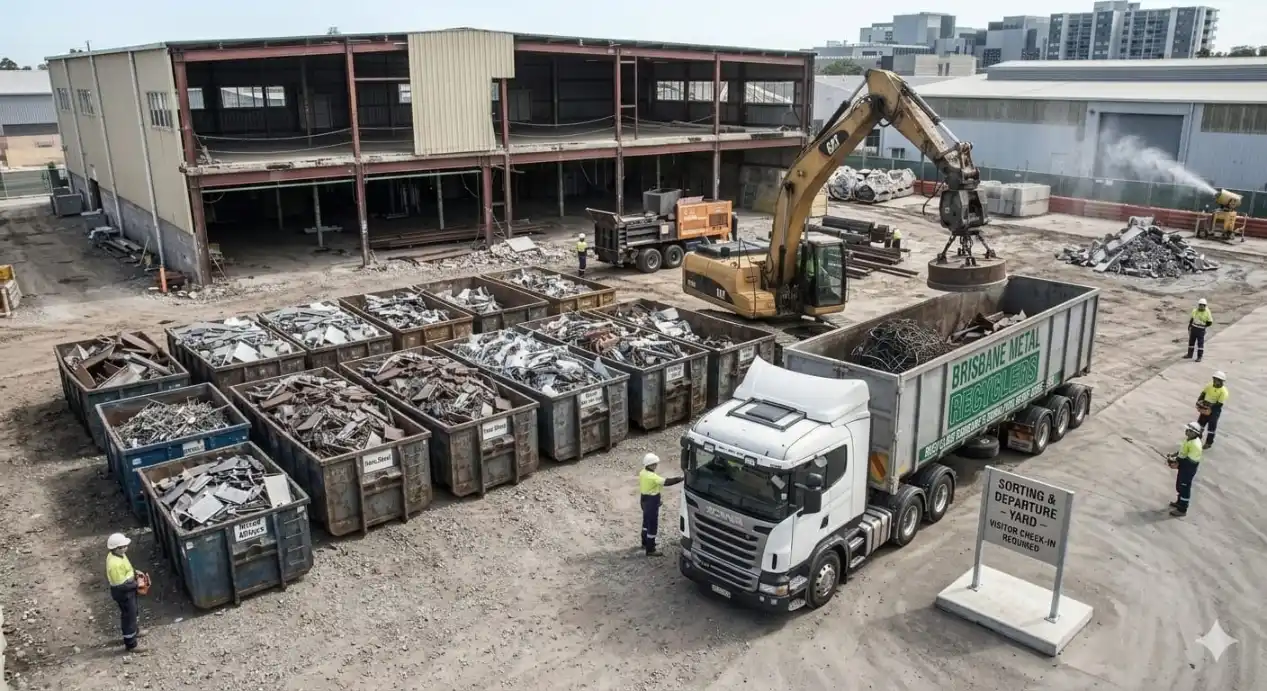
It is advisable to plan your site to utilise clearly defined sorting areas that have been marked for separating various materials as they are removed from the structure in order to maximise returns. If high value copper wiring is loaded in with heavy structural iron, the weighmaster will take the whole load down to the lowest common denominator price. When your demolition crew or plant operators are taught to sort materials at the extraction site, processing time is significantly cut, and you ensure your business realises the real market value of materials from every site.
Demolition Protocols to Be Taken Care Of
Selection and positioning of suitable site containment assets is a very dynamic consideration on industrial upgrades and demolition sites throughout South East Queensland, where safety margins are small. Bringing an external scrap metal collection process into line with the current rules on site is essential to ensure the process is not unsafe. Loose sharp metal objects scattered on walkways of high traffic areas pose an immediate risk of tyre puncture to heavy equipment such as forklifts, front end loaders and mobile cranes, and can also create an increased slip or trip risk for ground personnel.
Your recycling contractor needs heavy duty, specially designed storage bins appropriate for the amount of scrap being collected. Robust steel marrel skips come in a variety of sizes from 2 to 12 cubic metres and are perfect for collecting dense, smaller items such as steel turnings, stampings and cut pipework for manufacturing facility cleanouts or localised industrial plant upgrades. Large demolition jobs, on the other hand, require heavy duty roll on/roll off bins as large as 30 cubic metres, safe for carrying long length structural columns, large machinery housings and bulk metal scrap. These bins need to be strategically located in low-risk, easy-to-access areas of the site, well out of the way from overhead power lines and active haulage routes, so excavators can load them without disturbing the general layout and order of the working site.
Coordinating a Heavy Transport Fleet
Coordinating heavy transport fleet operations is the actual backbone of any large-scale industrial metal cleanup. The industrial areas of Brisbane are heavily dependent on the flow of goods, with the northern industrial towns of Brendale and Strathpine, and the wide industrial areas of the south in Rocklea and Coopers Plains. The empty weight of a 30 cube hooklift bin is around 7 tonnes, with 10 to 15 tonnes of heavy industrial scrap steel easily added to that. This volume of material is too great to handle in a normal non-commercial truck, and a licensed, highly trained transport professional is necessary for moving it off-site while dropping off an empty container and loading a full bin at the same time. This loop eliminates the downtime you'd experience from emptying scrap storage that would otherwise halt your demolition or plant clearing.
Mitigating Environmental Risk and Legal Compliance
Operating a commercial cleanup site in Queensland means dealing with a highly regulated corporate environment. The Department of Environment and Science has strict controls in place to minimise the risk of industrial contaminants entering local environments. Residual auto oils, chemical lubes or hazardous hydraulic liquids are often found in scrap machinery, old factory equipment or decommissioned manufacturing lines. When these liquids leak onto unsealed ground during a scrap teardown, the consequences can include huge environmental fines, stop-work orders and soil remediation liabilities that are truly a significant expense.
To collect, transport and process regulated industrial waste legally, a fully compliant scrap metal partner needs to hold the required Environmental Relevant Activity (ERA) licence. In addition, the Queensland Second-hand Dealers and Pawnbrokers Act requires formal identification of a business and verifiable documents to be issued when dealing with commercial scrap metal, for corporate entities and industrial contractors alike. This tracking ensures your corporate compliance team has a paper trail that is transparent and auditable, preventing illicit transactions from occurring. Official weighbridge dockets, waste tracking certificates and itemised financial statements ensure full transparency for corporate auditing and sustainability reporting.
Financial Transparency and Asset Recovery Value
Financial transparency and asset recovery value is a key component to the success of an industrial cleanup, second only to environmental safety. In large-scale site clearances, a few kilograms off the scale can cost thousands of dollars. To safeguard your investment, make sure your recycling yard has public weighbridges that are calibrated and certified to the public standard and monitored according to strict national measurement requirements.
Your recycling partner should offer full transparency and reporting, detailing the exact gross, tare and net weight for every bin removed from your location. Dockets should make clear what type of material is being classified and reference the weight directly to the London Metal Exchange (LME) and other global indexes, adjusted for local conditions in South East Queensland. A site can become a liability when a scrap operator splits the bin, transport and payment across unrelated entities. It becomes a simple, profitable and fully compliant industrial asset recovery project when you sign with an operator that handles the bin, transport, compliance and competitive payment under one umbrella. Running a mixed clean-out alongside the demolition? Our general scrap pickup service and site assessment booking work alongside a bulk bin program for exactly this reason.