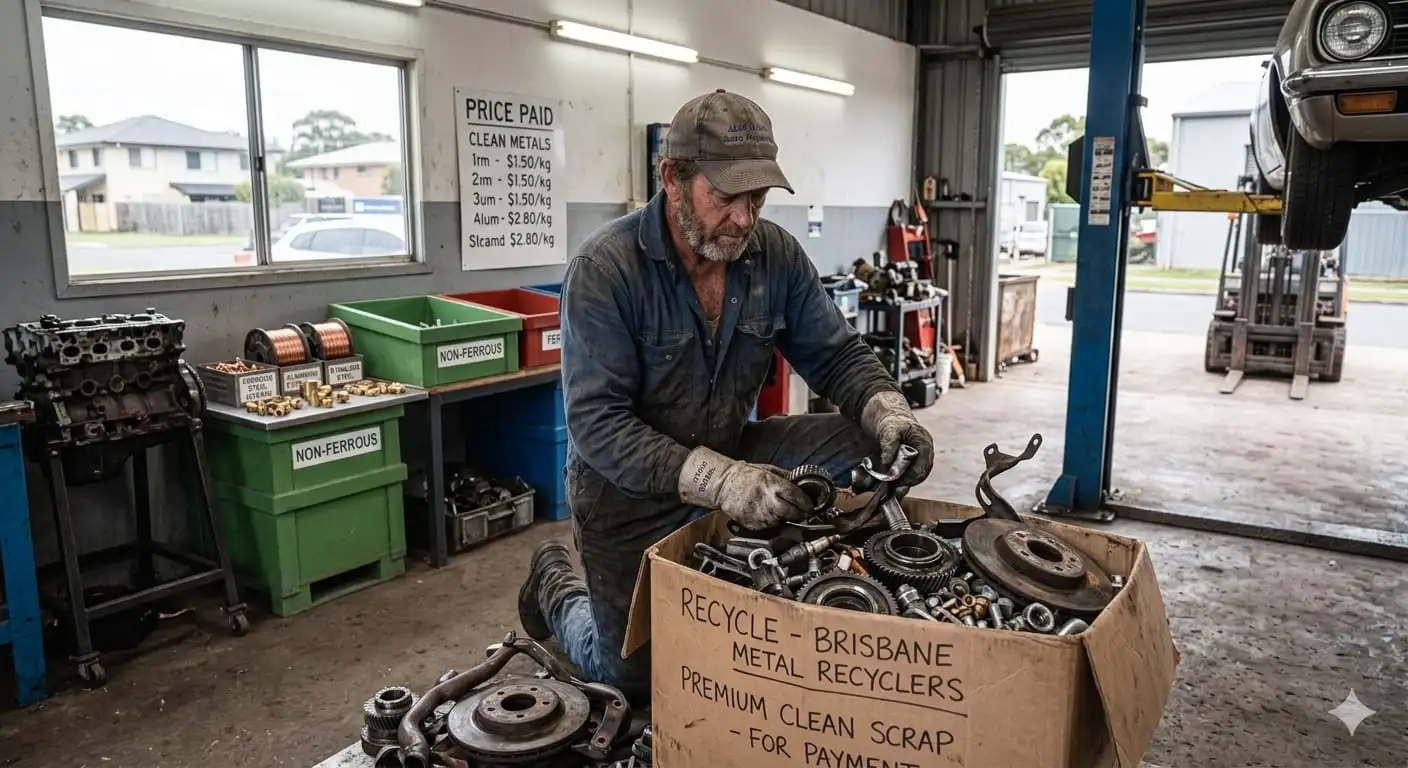
Automotive waste can easily accumulate whether you are a backyard mechanic, a do-it-yourself auto enthusiast or simply organising the garage of an old car. Valuable, heavy and highly recyclable metals are loaded into vehicles, and car batteries and car parts are great sources of scrap value. But, unlike normal copper pipes or aluminium cans, automotive waste is loaded with dangerous substances. The toxic lead and strong sulfuric acid are found in car batteries, and the engine parts hold heavy grease and leftover oil. These things can cost the environment a lot if they are not disposed of correctly in Queensland. Safe handling, organisation and selling of automotive scrap will ensure that you get the most out of your local yard.
This guide will introduce you to the best practices for car battery and car scrap recycling services in Brisbane, where you can make a profit.
The Value in Old Lead-Acid Car Batteries
About 99 percent of a lead-acid battery's core materials can be processed into new, high-quality car batteries. They come with very dense and heavy lead grids, so scrap yards are interested in purchasing them.
The lead: the lead plates, grids and terminal posts inside the battery are melted down to form lead ingots for recycling. The ingots are used as is in the production of new battery grids.
The plastic: the outer case is a heavy plastic (PP). It is crushed, washed and turned into plastic raw materials for new plastic battery cases.
The acid: the hazardous sulfuric acid is chemically neutralised and treated safely, or converted to sodium sulfate for industrial use.
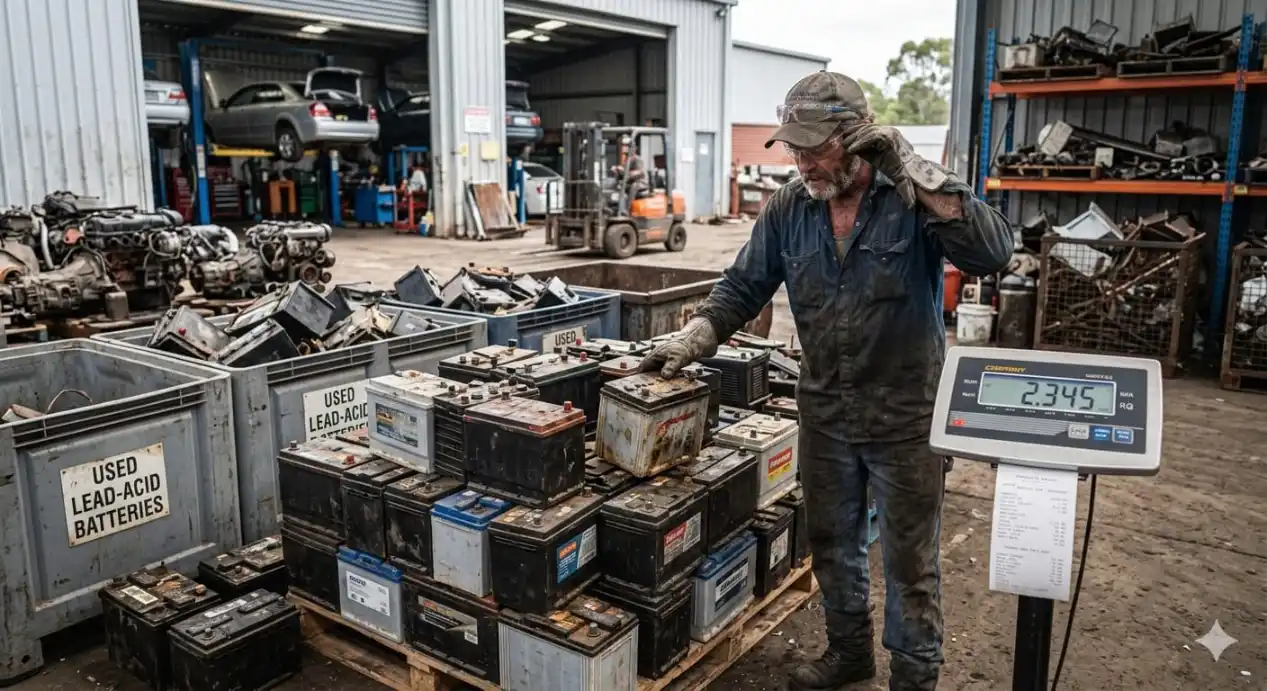
Safety is key: batteries are filled with dangerous acids which can burn skin and clothing. Always store and transport old batteries in a completely upright position, so that the vent caps do not leak acid.
Don't stack too high: batteries should not be stacked directly on top of each other without protective cardboard in between, because the weight of the heavy terminals may crush the plastic casings underneath.
Skin protection: acid-resistant thick gloves should be worn when dealing with old batteries to avoid contact with invisible chemical residue.
Hidden Value: High-Yield Scrap Car Parts You Shouldn't Miss
Many vehicle wreckers will give you a lower price for an entire chassis, but you can make a lot more money if you remove high-yield parts from that vehicle first. Many of these components are high quality non-ferrous metals which fetch rates per kg many times higher than mixed structural steel.
Aluminium wheels and rims: scrap dealers are interested in high demand aluminium wheels. However, to obtain the best price, all lead weights need to be removed first — clip the small, clip-on wheel weights from the rim, then strip any rubber or brass valve stems off of the valve. These items will make the yard sell your rims at a lower price, as "dirty aluminium."
Alternators and starter motors are heavy copper cores tightly wound and covered with aluminium on the outside. They are extremely dense and contain high levels of non-ferrous metals, and as a result are categorised by scrap yards on their own, under a lucrative pricing scheme known as "starters and alternators."
Today, most vehicle engine bays are composed of virtually all-aluminium radiators and AC compressors. Clean aluminium radiators and air conditioning compressors are an excellent way to upgrade your payout.
Queensland Legal Rules for Auto Scrapping
To maintain clean non-ferrous grading status, make sure all steel mounting brackets and any attached plastic overflow tanks are removed. While the prices for non-ferrous materials may be premium, mechanical components such as heavy steel brake rotors, cast iron engine blocks and steel exhaust pipes may not receive premium rates, but they are still a significant factor on the commercial scales.
Strict no cash outlays: no payment in cash is allowed for your used car batteries and car components at any licensed auto scrapping facility throughout Brisbane and Queensland. All valid settlements must go through electronic funds transfers (EFT) or physical bank cheques.
ID verification:bring a valid Australian driver's licence or passport. The yard must record your information along with the vehicle that brings the scrap metal to the yard, in line with Queensland's scrap metal laws.
Fluid drainage requirements: make sure all motor oil, coolant and transmission fluid has been completely drained from all engines, steering columns and gearboxes prior to delivery, in compliance with state environmental guidelines. This helps to avoid toxic spills on the scrap yard pavement.
Catalytic Converters: The High-Value Exception
If you're tearing down a vehicle for scrap, the catalytic converter is by far the highest-value single part that you'll come across. These are housed in the exhaust system, and do the job of filtering out toxic exhaust gases before they come out the tailpipe.
Catalytic converters are not copper or aluminium based. Rather, they include a ceramic honeycomb design overlaid with precious, rare earth metals.
Platinum: exceptional resistance to corrosion and high temperatures.
Palladium: used to transform toxic CO into safer gases.
Rhodium: a very scarce metal that is used to lower levels of nitrogen oxide.
These rare and valuable metals are so costly and difficult to work up that a single scrap catalytic converter can be worth more than the rest of the metal in the vehicle. Catalytic converters are a popular target for thieves throughout Brisbane due to their high black market value. Therefore, it is best to bring one in to a scrap yard with the serial numbers intact, as the yard will check the casing for the serial numbers to determine the exact make and model to which it belongs.
Serial numbers must be intact: yards will inspect the casing for engraved serial numbers to identify the exact make and model of the vehicle it came from.
Proof of ownership: they might ask to see a logbook, wrecking licence or receipt from a mechanic to show it was obtained legally.
Do not de-can it: do not try to open the steel shell to remove the ceramic honeycomb yourself. This destroys the grading process, makes the product dangerous to handle, and will be rejected by most good scrap yards.
Real-World Example: Recycled Lead in the Toyota Prius
Major car companies are already in the business of the circular economy of automotive batteries, as in the case of the Toyota Prius. Toyota has been managing its own closed-loop recycling system for years, specifically to collect the lead and plastic from used, old 12V hybrid starter batteries.
This recycled lead is then processed systematically, purified, melted down, and immediately cast into brand new 12V auxiliary batteries that power a Toyota hybrid's on-board electronics system, such as the Toyota Prius and Toyota Camry Hybrid. As long as you recycle your old battery in Brisbane, the likelihood that the components will be re-used in a modern hybrid car with digital dashboards, safety sensors and headlights is extremely high. Ready to clear out a garage full of automotive scrap? Book a collection with the team at Brisbane Metal Recyclers and get a fair, compliant payout.