When you realize that your car is at the end of its useful life, it's a difficult moment for any vehicle owner. A car that has been flooded in a South East Queensland deluge and has sustained catastrophic damage is an expense that is not worth considering, while a car that is a 'mechanical time bomb' and demanding more in repairs than it is worth is a bad investment.
Unregistered and not running vehicles left outside can rust, leak toxic vehicle fluids and incur council fines. Fortunately, Brisbane's automotive recycling system has a solution that allows your automotive burden to be transformed into instant value. The vehicle disposal process can be complicated, and you need to follow the Queensland Transport laws to ensure that you're covered by the law and you're getting the best possible scrap value for your car.
Evaluating a Scrap Vehicle: Mechanical Failure vs. Flood Damage
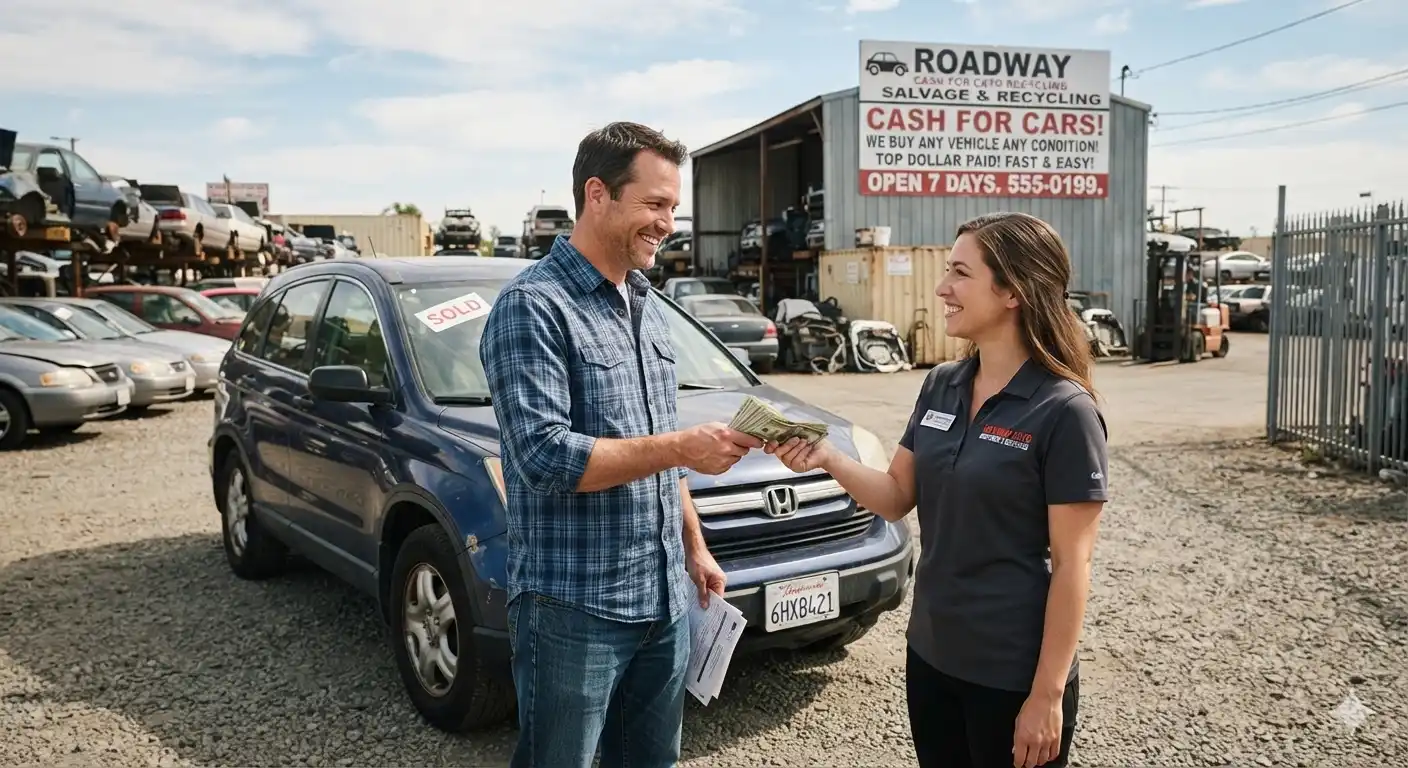
When you reach out to an auto wrecker or a Brisbane scrap car removal service, they know how they will price your car based on two main things; the metal weight of the vehicle's chassis and the value of the car parts they are able to salvage.
Even if your car has normal mechanical issues like a bad head gasket or a transmission that is seized, many of its body panels, electronic sensors, interior trim components, and catalytic converters are 100% salvageable. Wreckers will be able to give a premium price, since they can take apart these parts and re-sell them into the booming second-hand auto parts industry.
If your car has undergone a Brisbane River rise or a flash storm causing sub surface flooding, then the value circumstances change entirely. The microscopic silt, corrosive mud and all pervasive water that is left behind from the flood contaminates electrical wiring harnesses, short circuits computer modules and causes hidden structural rust. For a car that has been flooded, the wreckers look at the car solely as domestic heavy steel scrap. The payout is based on the current world market price for scrap iron and steel and the tonnage of the vehicle's curb weight.
The Legal Roadmap: Navigating Department of Transport Requirements
Just handing over the keys to a tow truck driver isn't enough. If you do not want to be hit by the big stick of fines, registration challenges or liability claims in the future, it is important to de-register the vehicle with the Department of Transport and Main Roads (TMR) Queensland systematically.
Step 1: Take off License Plates
The tow truck person will hook up your car, and before they do, take off the Front and Rear license plates. Such plates are government property and are connected to your name until they are officially surrendered. Do not leave a car with the plates on it on your property.
Step 2: Cancel Your Queensland Registration
Visit your nearest TMR customer service centre with the physical license plates. It is necessary to fill in a Form F3517 (Number Plate Surrender Application) in order to officially de-register the car. If your registration time is still left, whatever that might be, TMR will pro-rate the remaining months of your registration and send you a cheque with the balance directly to your address, without you having to spend any extra money.
Step 3: Get an Official Proof of Destruction
When handing your vehicle over to a licensed auto wrecker, make sure they issue you an official receipt or signed Certificate of Destruction. It's your last legal defense, confirming ownership ends and the car scrap has moved to a certified recycling centre.
Step-by-Step Guide to Preparing Your Car for the Scrap Yard
To make the collection process as safe and fast as possible, complete these three preparation steps before the flatbed arrives:
- Clear Out All Personal Items: Thoroughly check the glove box, center console, door pockets, boot, and under the seats. Look for CDs in the CD player and take any aftermarket electronic accessories, toll road e-toll tags or cameras off the dashboard. The moment the vehicle goes into the industrial crushing yard, it is impossible to get lost items back.
- Drain Specialized Fluids If Equipped: Professional wreckers use special environmental depollution systems to drain oil, transmission fluid and radiator coolant from the vehicle, but if you have an aftermarket LPG fuel tank, you need to inform the collection service of the need for special handling.
- Park in an accessible spot: Park the vehicle in an accessible spot where it is not obstructed. In areas that do not have a large garage, where the vehicle is stuck in a low clearance basement, or where other vehicles are blocking the driveway, notify the coordinator in advance to have a specialized winch or a low profile tilt-tray tow truck brought to the scene.
Environmental Compliance: The Auto Depollution Process
The Auto Depollution Process ensures that a car that becomes a scrap car doesn't end up in an industrial shredder as soon as it arrives at a licensed Brisbane junkyard. First, it has to go through an exhaustive process, legally required, called "auto depollution". Hazardous chemicals and heavy metals are loaded into vehicles and if not managed properly, can have a direct impact on the South East Queensland ecosystem.
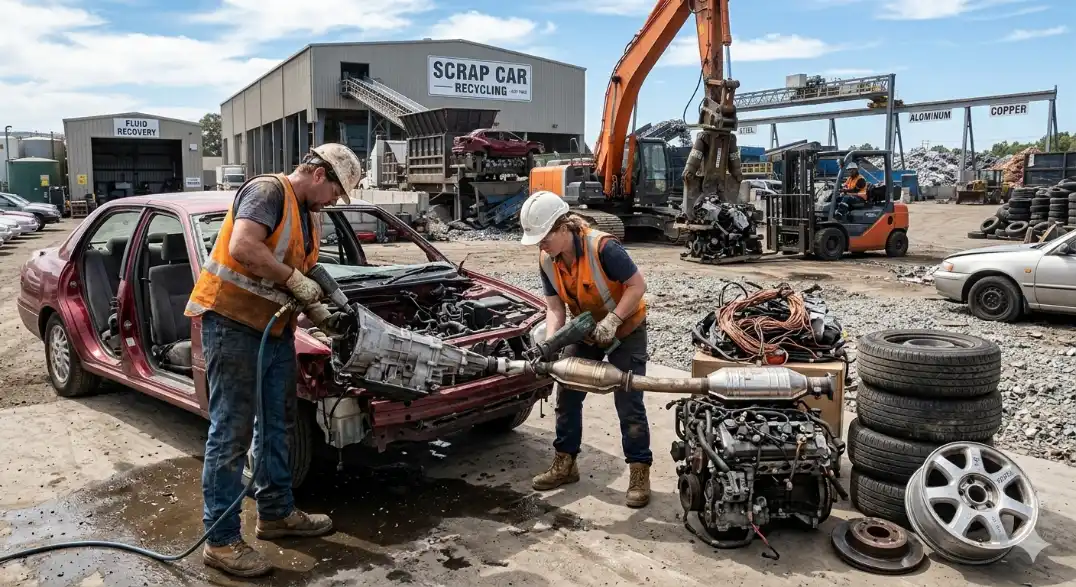
- Engine and Transmission Oils: Engine and transmission oils are pumped out into specially designed, enclosed, petroleum-based oil vats for industrial re-refining, before the steel chassis is crushed.
- Radiator Glycol: Ethylene glycol coolant is extremely poisonous to wildlife and pets because of its very sweet flavor and is completely removed from the system so it is not able to enter into Brisbane storm drains.
- To avoid ozone depletion, potent greenhouse gases such as R134a are safely recovered with a special vacuum recovery unit.
- Lead-Acid Batteries: The starter battery in the vehicle is removed in its entirety. Its lead plates and sulfuric acid are separated and used to make brand new consumer batteries.
You can rest assured that all the toxic fluids will not be thrown onto our local soil, waterways or close proximity to the Moreton Bay catchment area if you choose to take your car to a Brisbane licensed and environmentally compliant automotive recycler rather than an unregulated car recycling yard.
Real-World Impact: How a Flood-Damaged Sedan Helped Rebuild Brisbane Infrastructure
The value of vehicle recycling is evident in the post-flood recovery of Brisbane's infrastructure, with one flood damaged sedan helping to restore key road infrastructure. Thousands of cars all over low-lying suburbs such as Rocklea, Oxley and Goodna were totally covered in the toxic mud of the rivers during this crisis. A single case study; a 2014 Mazda 3 that was flooded in a driveway in Graceville; is a great illustration of a car that could have been a community problem and turned into a community asset.
The owner called a licensed auto recycler in Brisbane who has a license to recycle cars and get rid of the wrecked car as an eyesore. The engine and electronics were perfectly destroyed by silt and the car was ineligible to be used for spare parts. Its structural steel and aluminum, however, were both still in perfect condition.
After being picked up and the toxic liquids drained, the one tonne steel body of the car was immediately taken to a metal foundry in the area. There it was melted down and made into rebar; which is the structural steel used for heavy duty purposes. That's recycled steel that was delivered to civil construction sites, straight into South East Queensland, within a few months. That flooded sedan's metal was deployed to shore up the foundations of upgraded, flood-resilient bike paths along the Brisbane River, and also to beef up local retaining walls in the western suburbs.